
THE WARM JETS
The Warm Jets erupted from the woods of Palenville, New York in 1987, formed by brothers Brian, Tom, and Robert Goss, along with close friend Michael Billera. After moving to New York City’s Lower East Side, they quickly embedded themselves in the downtown underground, becoming a fixture at venues like CBGB, The Pyramid Club, Downtown Beirut, and The Lismar Lounge.
Early live sets were wild, improvised performances—often beginning with Side A of their single and ending with Side B, using those recordings as the only anchors in an otherwise chaotic, exploratory barrage of sound. Their music blended the scorched-earth experimentation of Butthole Surfers with the oppressive weight of Swans, before evolving into a raw, riff-heavy style that prefigured the coming grunge explosion.
In 1988, their single “Wacked” became the first release on SOL Records, the new label launched by Bob Mould (Hüsker Dü) and Steve Fallon (Maxwell’s). They shared bills with The Ramones, Live Skull, and Pussy Galore, earning a reputation for incendiary sets and an uncompromising sound.
When Phil Schuster replaced Robert Goss on bass, the band locked in tighter, gaining momentum that peaked with a support slot on Jane’s Addiction’s Nothing’s Shocking tour. But by 1989, the band imploded—leaving behind a short but searing legacy of experimental noise, proto-grunge power, and a live show that felt more like a ritual than a performance.
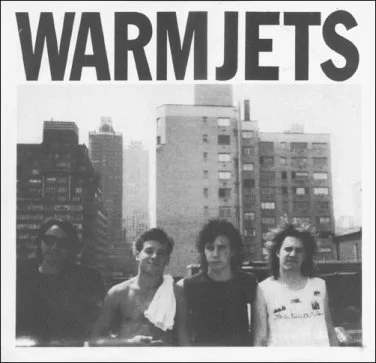
WHACKED / WHITE NOISE (1988)
In 1988, The Warmjets released their 7″ single “Wacked / White Noise”, the inaugural release on SOL Records, the label founded by Bob Mould (Hüsker Dü) and Steve Fallon (Maxwell’s). The record captures the band at their most unrestrained, blending abrasive, chaotic noise‑rock with raw, experimental energy reminiscent of Swans and the Butthole Surfers. Serving as both a blueprint and a catalyst for their incendiary live performances, the single has become a cult artifact of the late‑80s Lower East Side underground, showcasing The Warmjets’ uncompromising sonic vision and their brief but unforgettable contribution to the era’s avant‑rock landscape.
